
A quality service provided by Assure Health Care Solutions Pvt. Ltd
A quality service provided by Assure Health Care Solutions Pvt. Ltd
+91 98959 90043
+91 87148 42066
info@radproteleradiology.com
hr@radproteleradiology.com
Second Floor, Sree Sree Complex,
Madannada, Kollam -691010
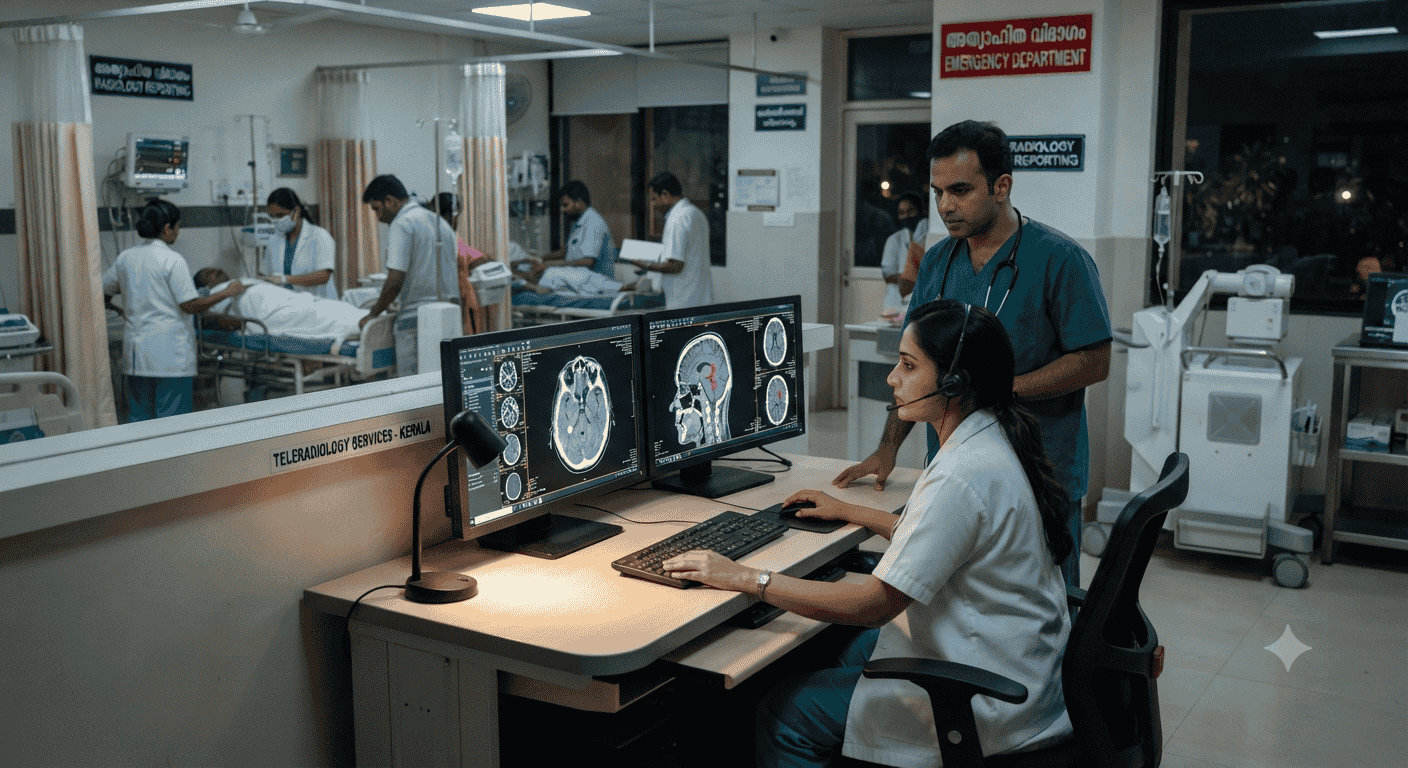
The emergency department has a tendency of experiencing times when there are many patients. These include the evening, weekend, holiday period, and other times when emergencies may occur. In these periods, it is important that the physician has easy access to diagnosis in order to provide timely treatment. Medical imaging, including X-ray, CT scan, and MRI, is vital in the diagnosis of trauma, stroke, respiratory disorders, abdominal emergencies, among others.
The healthcare facilities in Kerala vary from district hospitals to general, tertiary, and specialist hospitals, depending on infrastructure, equipment, and availability of healthcare professionals. The Kerala State Health System Resources Center has been able to take note of this in formulating referral policies for healthcare facilities at different levels.
Here, teleradiology can be utilized to provide hospitals with radiology services remotely when there is an overload of work or when the radiologist is not available.
Teleradiology is the technique of transferring images digitally to a radiologist in a remote location. Depending on what the hospital needs, there are certain images that may be reviewed through the remote process such as the X-rays, CT scans, and MRI scans.
The white paper on teleradiology by the Indian Radiological and Imaging Association focuses on issues related to technical standards, clinical services standards, data security, reporting and communication in teleradiology services.
The main strength in an emergency department setting is that imaging does not always have to depend on the availability of a radiologist.
When there is an influx of patients in emergency during busy hours, several imaging modalities can reach the radiology department all at once, which can put the workload on reporting and create delays if the radiologists are working on more than one case simultaneously.
The application of teleradiology at busy hours in emergency departments in Kerala assumes special significance in this situation. The images can be sent to an available radiologist who will interpret the examination remotely and generate a report using the emergency workflow.
Interpretation at the right time will assist the emergency physician in considering the results along with the clinical condition of the patient.
Trauma cases can require rapid imaging assessment, especially when patients arrive after road accidents or other serious injuries. CT and X-ray examinations may be required to evaluate suspected fractures, internal injuries, or other abnormalities.
During periods of increased emergency workload, remote radiology reporting can provide additional reporting capacity. This can support hospitals when several trauma and emergency cases arrive within a short period.
Emergency departments do not operate only during conventional working hours. Patients may require imaging at night, during weekends, or on public holidays.
A structured teleradiology service can provide remote reporting coverage during these periods. Teleradiology models can include outsourced or in-house arrangements, depending on how the healthcare institution organizes its radiology workflow.
This can be particularly useful for hospitals that have limited specialist availability outside regular working hours.
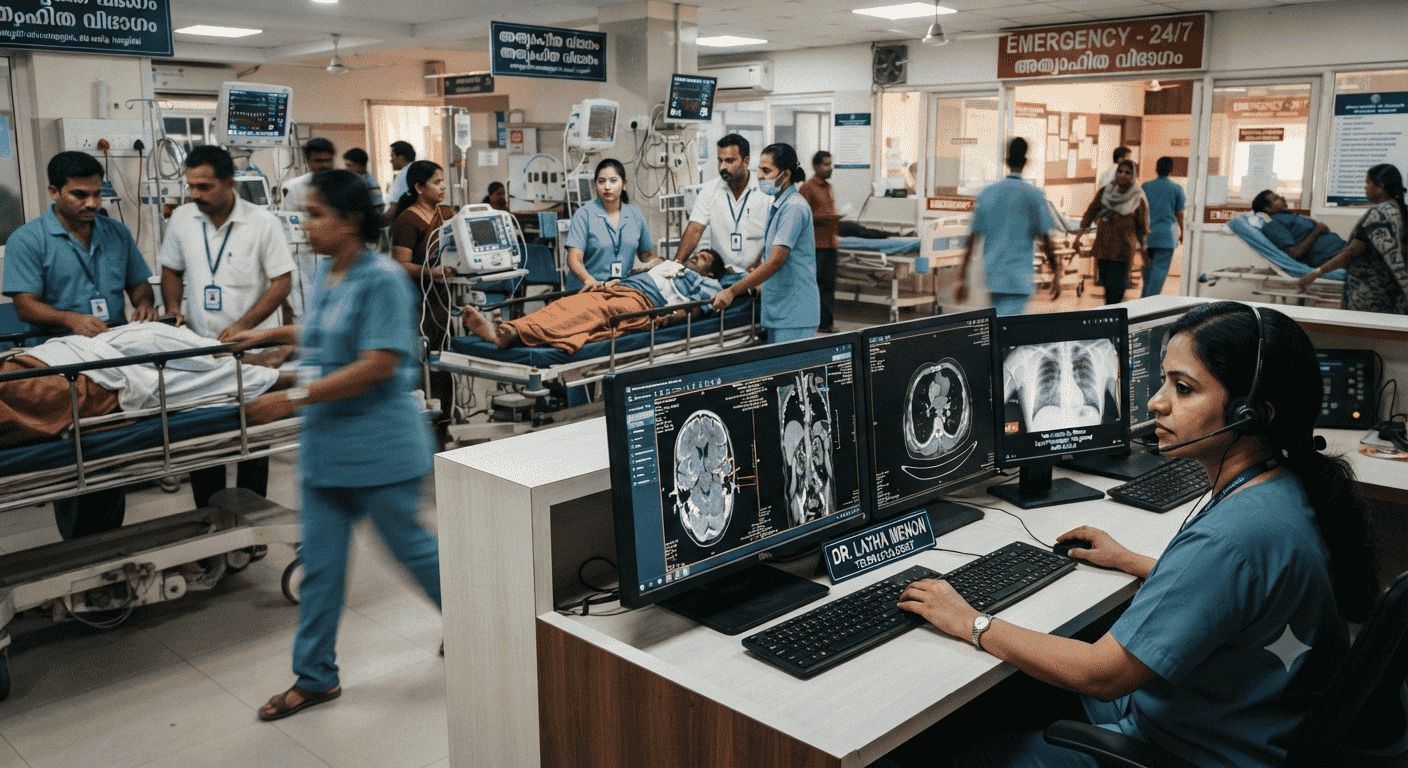
In emergency medicine, the usefulness of an imaging examination depends not only on obtaining the scan but also on receiving an appropriate interpretation within a clinically useful timeframe.
Guidance on emergency teleradiology emphasizes timely communication between radiologists and treating physicians, particularly when imaging findings may affect immediate patient management.
A well-designed workflow can therefore connect the imaging department, remote radiologist, and emergency physician without unnecessary communication gaps.
Peak hours can place pressure on radiology teams because multiple patients may require imaging at the same time. Teleradiology can act as an additional reporting resource rather than requiring the hospital to depend entirely on its available on-site workforce.
For example, a hospital may receive several emergency CT examinations within a short period. Remote reporting support can help distribute the workload while maintaining an organized reporting process.
Teleradiology can support reporting for various imaging examinations, depending on the capabilities and protocols of the service provider. Common emergency-related studies may include:
The exact reporting workflow should be determined by the healthcare institution, the clinical requirement, imaging quality, and the qualifications of the radiologist.
This technology is not merely concerned with the transfer of the image from point to point. The process in which images are taken must include the clinical details, images transfer, interpretation, reporting, and communication of significant findings.
According to the American College of Emergency Physicians, it is necessary to inform the radiological findings promptly, since the treatment decisions may be based on their interpretation.
That is why there is a need for hospitals to have specific guidelines concerning emergencies, critical findings, report documentation, and radiologist-to-physician communication.
Healthcare facilities considering teleradiology should look beyond reporting speed alone. Important factors include radiologist qualifications, reporting protocols, communication procedures, image quality, data security, turnaround expectations, and the ability to handle emergency workloads.
A reliable service should also have clear procedures for urgent findings and communication with the treating medical team.
For hospitals managing high imaging volumes, remote radiology reporting can provide additional support when emergency departments experience workload peaks.
Click one of our contacts below to chat on WhatsApp