
A quality service provided by Assure Health Care Solutions Pvt. Ltd
A quality service provided by Assure Health Care Solutions Pvt. Ltd
+91 98959 90043
+91 87148 42066
info@radproteleradiology.com
hr@radproteleradiology.com
Second Floor, Sree Sree Complex,
Madannada, Kollam -691010
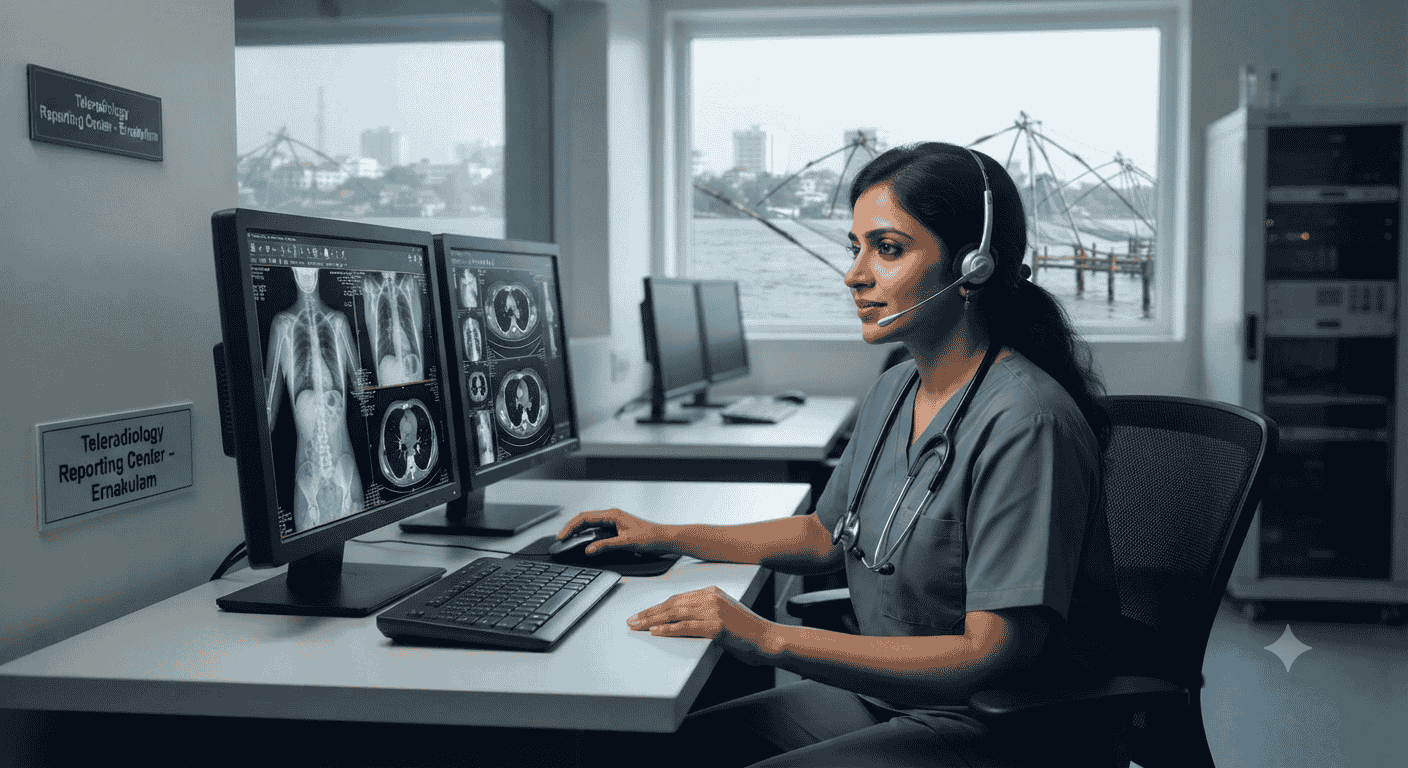
The provision of healthcare services is increasingly relying on rapid and efficient diagnostic services. At a busy health hub such as Ernakulam, hospitals and imaging centers process a consistent stream of x-rays, CT scans, MRIs, and other radiographic studies. Radiology has thus increasingly become integral to the day-to-day operations of hospitals, particularly those related to emergency medicine.
With an increase in radiography procedures, there is a need for an efficient mechanism of managing reporting responsibilities while maintaining efficiency and quality. Teleradiology is increasingly playing a significant role in this regard as it allows for the exchange of medical images between competent radiologists.
The government healthcare guidelines also appreciate the significance of radiology in the operations of hospitals and emergency centers, where routine imaging is anticipated, and reporting turnaround times are taken into consideration.
Ernakulam has a well-established healthcare environment that has hospitals, diagnostic centers, and special clinics that take care of the needs of people in Kochi and nearby places. As there is increasing demand for imaging services in Ernakulam, it becomes necessary for the hospitals to have a reporting system that can cater to both regular and urgent requirements.
Teleradiology serves as a different kind of reporting facility that can connect the hospitals to the radiologists through the use of imaging technologies. This does not mean that hospitals will depend only on those radiologists who are present physically at the hospital but images can be transferred for interpreting through secure means.
Imaging is one of the necessary diagnostic tools that is used in emergency departments to aid quick decision-making. Imaging like X-ray or CT scanning can be needed in trauma cases, stroke cases, respiratory emergencies, among others.
A hospital can have all the necessary imaging tools and personnel but lack radiologists for interpretation of these images. Teleradiology will assist here in connecting the images to any remotely located radiologists.
Tele-radiology systems have been mentioned by the Ministry of Health and Family Welfare before as a means of connecting remote healthcare centers with radiologists.
This can be useful in Ernakulam hospitals to assist in a more organized reporting system in case the radiologists are not immediately available.
Hospitals operate not just during regular business hours. Emergency departments, ICU and inpatient facilities might need diagnostic imaging around the clock.
Having a radiologist available at all times in the hospital might pose difficulties for some hospitals. Teleradiology might allow the provision of remote reporting services in accordance with the needs of the hospital.
That does not imply that all cases will need to be reported in a remote fashion. The appropriate reporting strategy will depend on the kind of examination, the circumstances of the case, etc.
The Indian healthcare system itself employs tele-radiology in public health services. The 2025-26 annual report of the Ministry of Health and Family Welfare reports that tele-radiology services were functioning in 12 States/UTs under the applicable national health program initiatives.
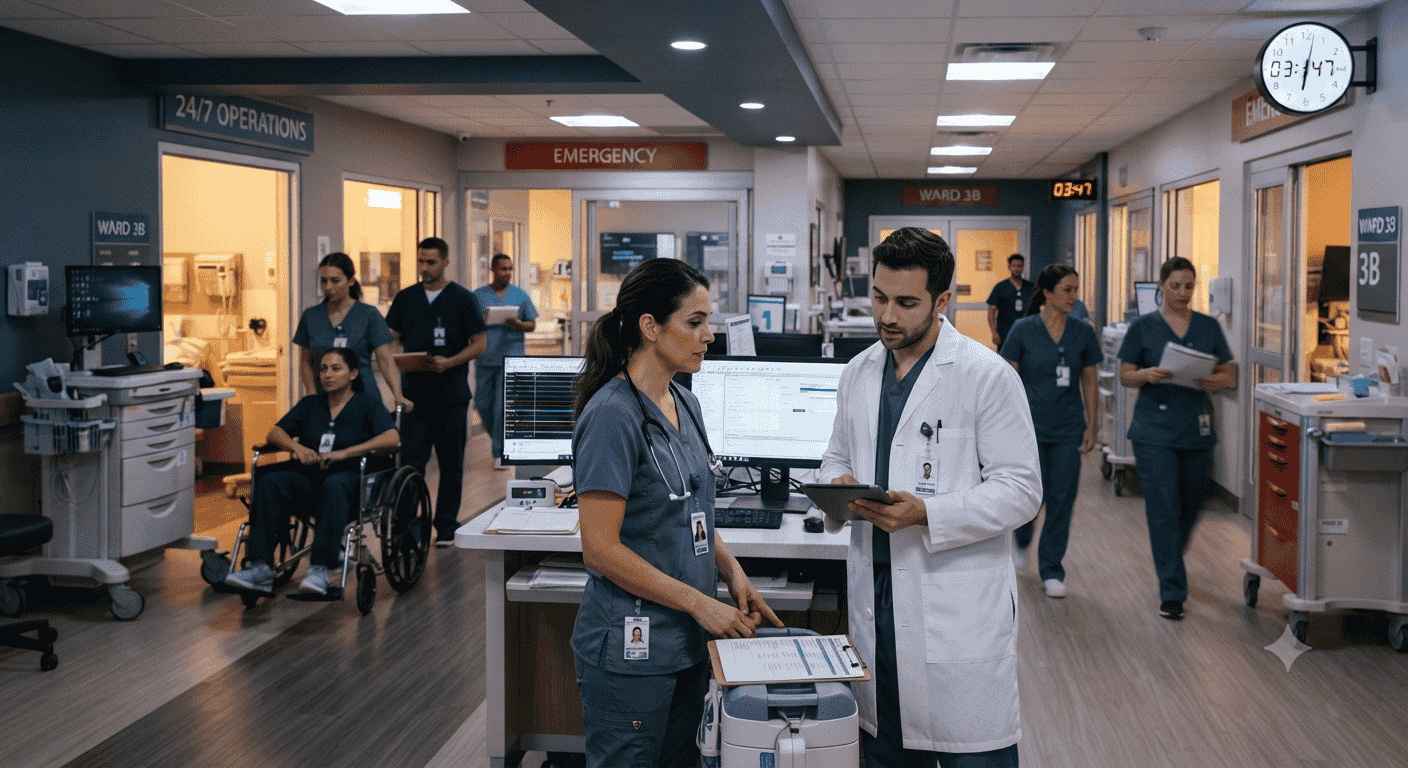
Large hospitals and diagnostic centres may handle hundreds of imaging studies across different modalities. During busy periods, the reporting workload can increase significantly.
A structured teleradiology workflow can help distribute cases among available radiologists. This can be useful for routine reporting as well as situations where additional reporting capacity is required.
For hospital management, the benefit is not simply about sending images outside the facility. It is about creating a more flexible reporting workflow that can respond to changing patient volumes.
Different imaging studies may require different areas of radiological expertise. Hospitals may need access to radiologists with experience in areas such as emergency imaging, neuroimaging, chest imaging, abdominal imaging or musculoskeletal studies.
Remote reporting can expand the pool of specialists available to a hospital. Instead of limiting reporting capacity to professionals who are physically present, hospitals can establish a structured network of qualified radiologists.
This can be particularly valuable when a hospital wants additional expertise for specific or complex cases.
There are many connections between radiology and other departments within the hospital. Emergency medicine doctors, surgeons, physicians, and specialists rely on imaging studies when making clinical decisions.
An efficient teleradiology solution may fit into the current workflow of the hospital in terms of technology. Imaging studies can be transmitted, reviewed, and reported through the appropriate systems, after which the reports will be provided to the corresponding clinical group.
Government guidelines for electronic medical records issued in India also covered issues such as data interoperability, exchange, security, privacy, and telemedicine solutions integration.
Therefore, it becomes essential to consider secure technology and information management when implementing remote reporting at hospitals.
Teleradiology should not be viewed simply as an outsourcing option. Hospitals need to consider several factors before integrating it into their operations.
These include:
A reliable technology infrastructure is equally important. High-quality images must be transferred securely and made available to the reporting radiologist without unnecessary delays.
For hospitals and diagnostic facilities looking to strengthen their remote reporting workflow, RadPro Teleradiology provides teleradiology support
Click one of our contacts below to chat on WhatsApp