
A quality service provided by Assure Health Care Solutions Pvt. Ltd
A quality service provided by Assure Health Care Solutions Pvt. Ltd
+91 98959 90043
+91 87148 42066
info@radproteleradiology.com
hr@radproteleradiology.com
Second Floor, Sree Sree Complex,
Madannada, Kollam -691010
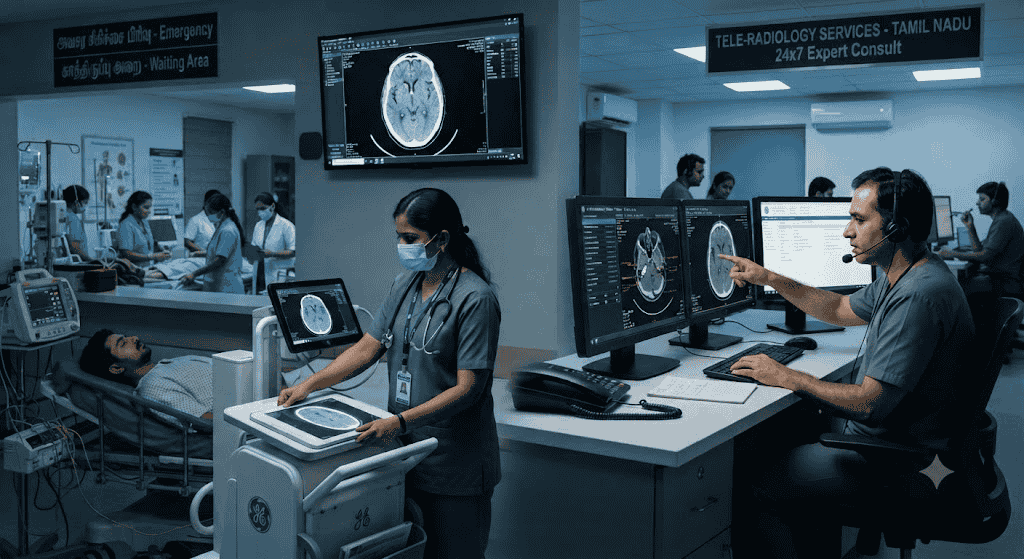
Emergency hospitals work on a 24/7 basis; similarly, emergencies do not have any set work timings. The arrival of a patient with trauma, stroke symptoms, respiratory ailments, or other emergencies can be assisted by a quick diagnosis. In this process, radiology is one of the key factors, where imaging using X-ray, CT scan, or MRI will help a lot in providing relevant information to the emergency physicians.
But at times, it may be difficult to arrange radiologists on a round-the-clock basis; even during weekends and holidays. It is here that the concept of Teleradiology in 24-Hour Emergency Hospitals in Tamilnadu comes into action.
The emergency hospital requires diagnostic imaging that can cater to patients irrespective of the time of the day. It may become necessary to have such diagnostic tests right away following an accident, in cases of stroke, or when doctors have to examine an unusual health situation.
In several cases of emergencies, getting the scan is only a part of the process. It also becomes necessary to interpret the images and get a proper analysis done by a qualified radiologist. Teleradiology helps transfer medical images to a radiologist based at a remote place for interpreting them.
Teleradiology has been also recognised as a method of tele-reporting of CT scan and x-ray images through government guidelines on healthcare in India.
This would be beneficial to the hospitals in Tamil Nadu in providing more flexibility with respect to the diagnostic work load, especially when no radiologist is immediately available in the hospital premises.
Teleradiology process flow is meant to link the imaging department of the hospital with the remote radiology reporting team.
In case an emergency patient is subjected to an X-ray, CT, MRI, or any other type of examination supported by the process, the images can be shared using a secure digital network. Clinical information can accompany the images for the purpose of offering the radiologist necessary context while evaluating the examination.
The radiologist evaluates the images and writes the report. Based on the hospital’s process flow and the agreement, any urgent findings can be shared with the clinical team.
This process enables the radiology reporting process to continue outside regular office hours.
CT and X-ray examinations are particularly important in emergency departments. For example, CT imaging can be used in the assessment of trauma and suspected neurological emergencies, while X-rays are commonly used for fractures and other acute conditions.
Some government hospitals already provide emergency X-rays and trauma CT services on a 24-hour basis, demonstrating the importance of continuous imaging availability in emergency care.
Teleradiology can complement this infrastructure by providing access to radiology interpretation when the imaging examination has been completed.
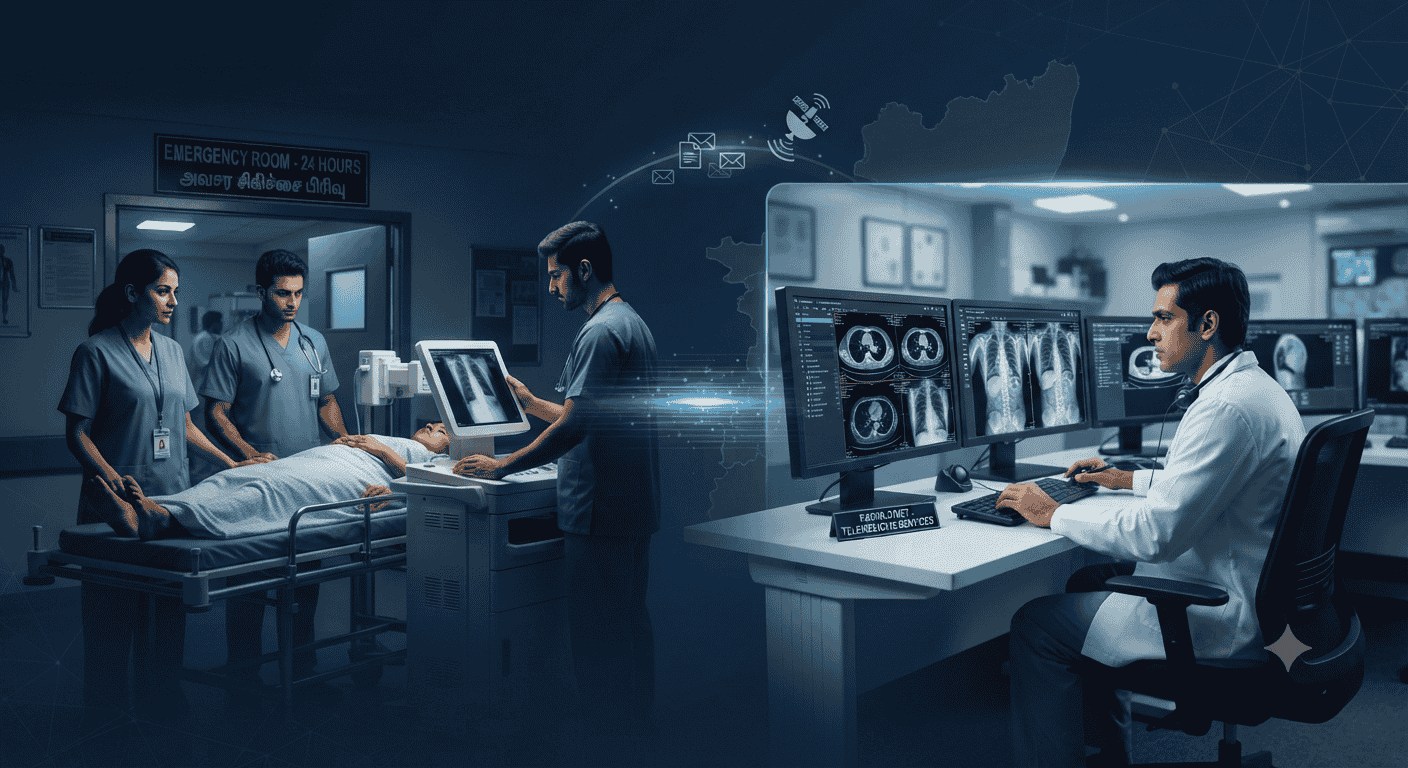
One of the primary advantages of teleradiology is the ability to connect hospitals with radiologists who can review examinations remotely. This can be particularly useful during night shifts, weekends, and holidays.
Rather than allowing completed scans to remain in a reporting queue until the next working period, hospitals can establish workflows for remote interpretation.
Emergency physicians often need diagnostic information while making time-sensitive clinical decisions. Access to radiology reporting can help the clinical team understand imaging findings and determine appropriate next steps.
Teleradiology therefore becomes part of a wider emergency-care workflow rather than simply being a method of transferring medical images.
Large hospitals and busy emergency departments can experience fluctuations in imaging workload. During particularly busy periods, reporting capacity may become strained.
A structured teleradiology service can help hospitals manage reporting workloads by providing additional radiology resources when required.
A major consideration for 24-hour hospitals is maintaining service continuity outside normal working hours. Teleradiology can support reporting workflows during nights, weekends, and holidays when on-site staffing arrangements may differ from daytime operations.
Published teleradiology practice guidance highlights the potential for remote reporting to make radiology services less dependent on time and location, while also emphasising quality, communication, security, and appropriate professional responsibility.
A teleradiology process involves much more than just the transmission of an image between two computers. The key factors required in order for there to be a robust system include image transmission, proper handling of data, reporting facilities, communication procedures, and the use of pertinent patient data.
Security and confidentiality are particularly crucial since the images contain confidential medical data. Security, privacy, documentation, archiving, dependability, quality improvement, and accountability are all key considerations in the practice of teleradiology.
As such, hospitals need to take into consideration the entire reporting procedure when adopting teleradiology systems.

Those healthcare facilities that need to enhance their remote reporting capabilities will find RadPro Teleradiology very useful as it represents a technological way for healthcare facilities to be connected to the services of radiology reports.
The service may cover imaging procedures like CT, MRI, and X-ray according to the requirements of each individual hospital and its reporting strategy. Incorporating remote radiology skills into the existing workflow will allow healthcare facilities to ensure reporting consistency outside regular hours.
The point here is not simply transferring of the images remotely. The effective teleradiology proces
Click one of our contacts below to chat on WhatsApp