
A quality service provided by Assure Health Care Solutions Pvt. Ltd
A quality service provided by Assure Health Care Solutions Pvt. Ltd
+91 98959 90043
+91 87148 42066
info@radproteleradiology.com
hr@radproteleradiology.com
Second Floor, Sree Sree Complex,
Madannada, Kollam -691010

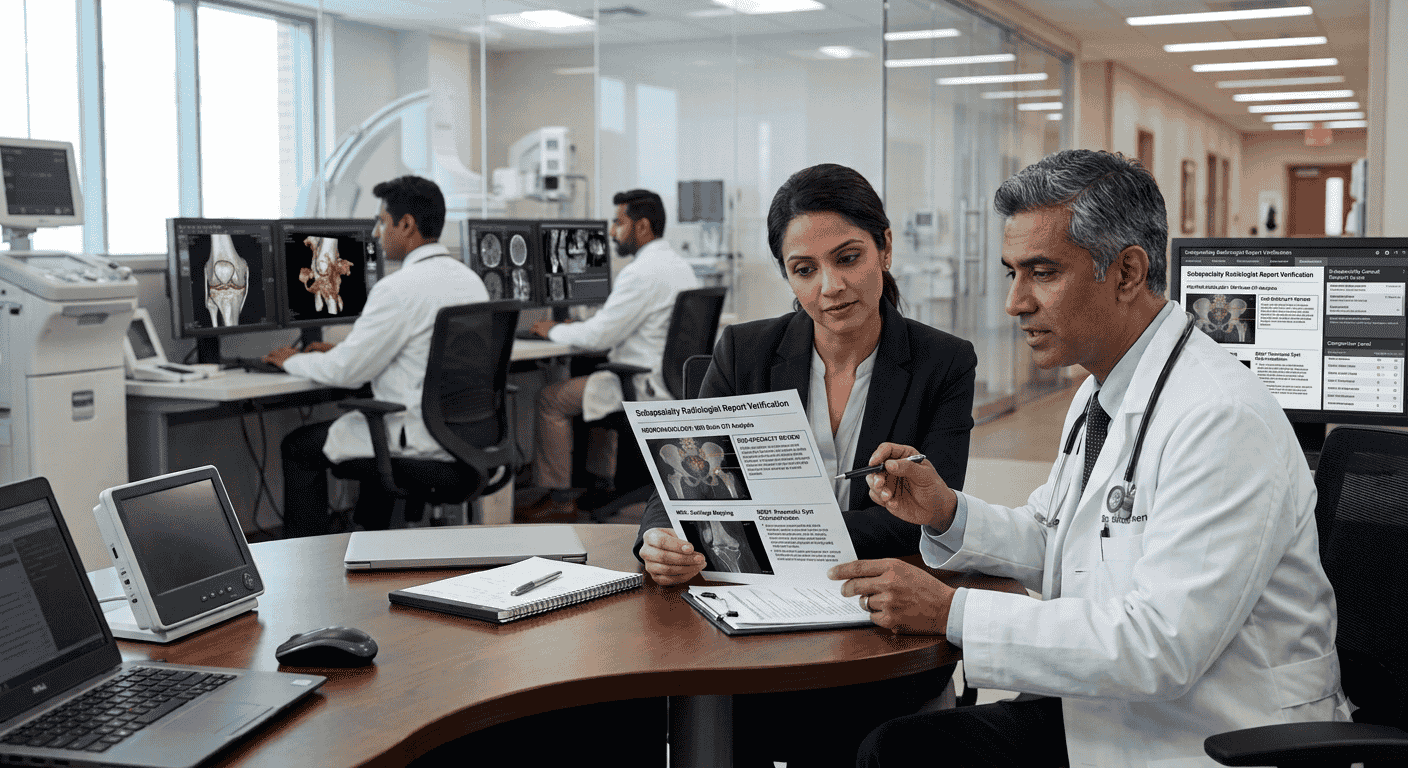
The process of medical imaging has been recognized as an indispensable element of modern medicine that helps diagnose a variety of diseases. Nevertheless, receiving an accurate image is not the last step towards accurate diagnosis; the correctness of the radiology report depends on the level of expertise of the radiologist who interprets the scan.
In this regard, subspecialty radiologists can be considered indispensable specialists. While interpreting any imaging test, subspecialty radiologists build their expertise in some particular fields, which include neuroradiology, musculoskeletal imaging, abdominal imaging, breast imaging, cardiac imaging, and pediatric radiology.
It is especially important for hospitals and diagnostic facilities working with remote reporting services to understand the Role of Subspecialty Radiologists in Accurate Reporting.
A subspecialty radiologist is a physician who has received additional training and developed expertise in a particular area of radiology. While general radiologists can interpret a broad range of imaging examinations, subspecialists focus on specific anatomical regions, diseases, or patient groups.
Common radiology subspecialties include:
This focused expertise becomes particularly important when imaging findings are complex, subtle, or difficult to differentiate.
Importance of Subspecialty Radiologists in Reporting
It is clear that subspecialty radiologists play an important role in accurate reporting in complicated cases. These specialists read imaging studies constantly in the particular subspecialty, and thus they can see patterns that might not be seen by someone who sees more varied studies.
For instance, a neuroradiologist will be quite knowledgeable about subtle brain MRI changes, and a musculoskeletal radiologist can be better at recognizing the differences between various ligament, tendon, cartilage, and bone injuries.
Specialized knowledge can lead to:
And ultimately help physicians make the right decisions regarding the treatment or further investigation of patients.
Some imaging studies contain findings that require detailed anatomical and clinical knowledge. A complex MRI, multiphase CT, or advanced cardiac imaging study may contain numerous subtle observations that need careful assessment.
Subspecialty radiologists are familiar with the normal and abnormal imaging appearances associated with their field. This allows them to evaluate complex cases systematically and communicate important findings clearly.
Radiology reports form a vital medium of communication between radiologists and the referring physicians. A radiologist’s report is not supposed to just describe the finding in an image but it should rather contain clinically relevant information that assists in moving forward in the care process.
The subspeciality radiologist is capable of offering an interpretation that helps the physician comprehend the importance of imaging findings. A sound conclusion and a relevant recommendation will help in minimizing confusion and assist in better decision making.
For instance, if the radiologic imaging identifies an unusual finding in the body, then a subspecialist will be able to make a better differential diagnosis and offer an appropriate examination.
Teleradiology has been instrumental in enabling hospitals and diagnostic centers to acquire services of radiologists outside of their physical geographic vicinity. This is highly beneficial when the institution needs some particular expertise that is otherwise not available within its vicinity.
A teleradiology service provider will help institutions link up with radiologists specializing in various fields of diagnostic imaging. This enables institutions to get interpretations from experts on complicated tests that they would not necessarily need all specialists for.
For instance, an institution may have services of a general radiologist but lack a neuroradiologist for interpreting complicated MRI of the brain.
Another key advantage of specialized interpretation is reporting consistency. The more often radiologists interpret studies in the same subspecialty, the better they are acquainted with imaging protocols, terminologies, structures used in reporting, and significant findings.
Reporting consistency will facilitate referring physicians’ understanding and comparison of the report with the previous study.
Teleradiology centers that focus on quality reporting might have systems in place like peer review, case discussion, reporting protocols, and quality assurance systems.
Click one of our contacts below to chat on WhatsApp