
A quality service provided by Assure Health Care Solutions Pvt. Ltd
A quality service provided by Assure Health Care Solutions Pvt. Ltd
+91 98959 90043
+91 87148 42066
info@radproteleradiology.com
hr@radproteleradiology.com
Second Floor, Sree Sree Complex,
Madannada, Kollam -691010
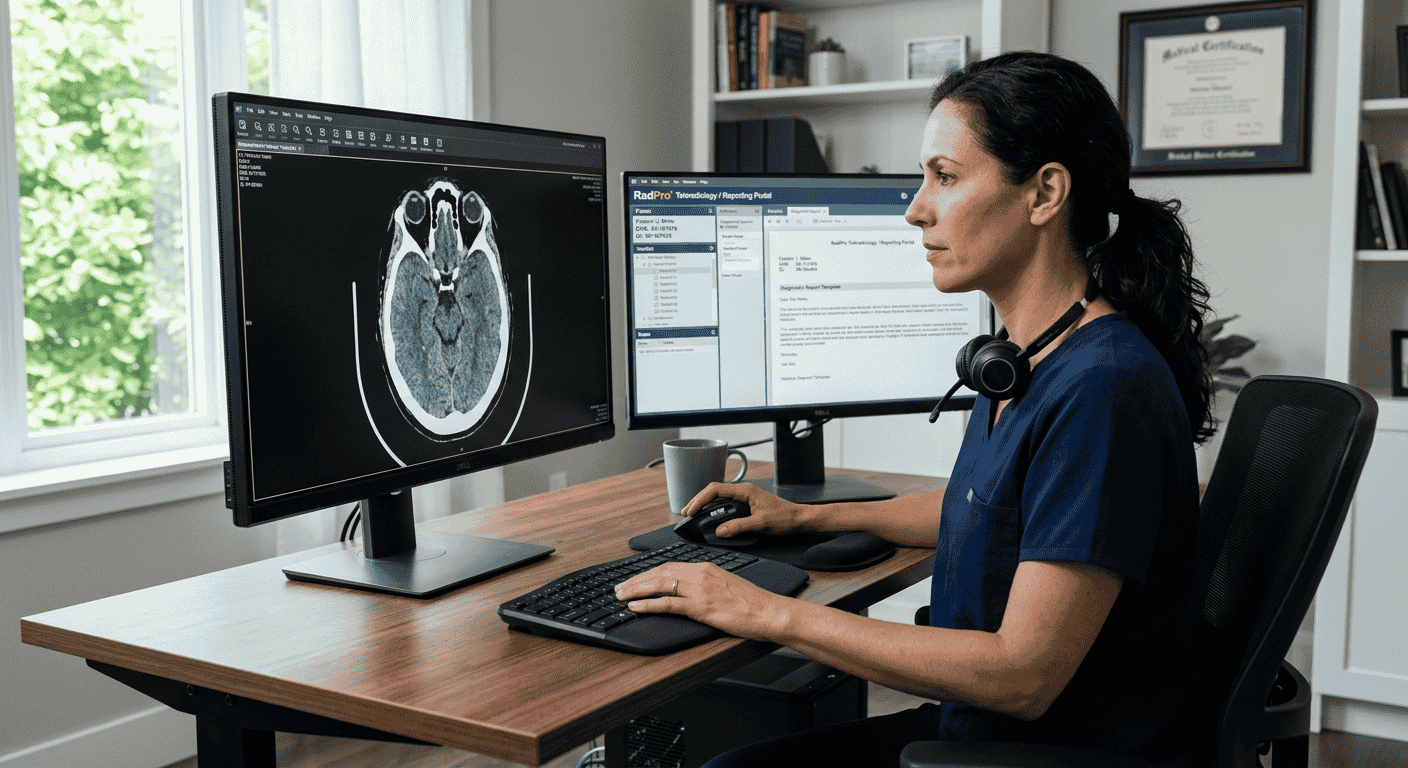
There is an increase in reliance on diagnostic imaging by health practitioners when it comes to making decisions for the benefit of the patients. Diagnostic images such as x-rays, CT scan, MRI scan and other diagnostic images play a significant role in helping with diagnosis and treatment. With increasing volumes of imaging in hospitals and diagnostic centers, there is a need to have a smooth radiology reporting process.
In Kochi, which is a healthcare hub in the state of Kerala, there may be a need for healthcare centers to deal with regular and emergency imaging services and also with specific reporting guidelines. There is an option to use international teleradiology as a means of connecting healthcare centers to radiologists irrespective of geographical location. However, it is not just a matter of moving images over the internet.
International Teleradiology Workflow in Kochi could assist in developing a framework of reporting remotely.
The healthcare system in Kochi is a diverse one which comprises multispeciality hospitals, diagnostic centres and speciality medical facilities. Such establishments are in need of reliable radiology reporting in order to assist in making clinical decisions.
The idea of international teleradiology enables healthcare images to be securely transmitted to specialists in radiology from another country or region provided that it is possible in accordance with local laws, licensure requirements and agreement.
Thus, for instance, there can be a situation when a certain hospital needs more reporting staff at some working hours or requires a specialist for some particular radiological examination. The right organisation of reporting can assist in solving such problems.
Nevertheless, collaboration between two countries should be well thought out. The first step is to make sure of compliance of the reporting with the legal requirements.
Developing a reliable system requires a clearly defined process from the moment an imaging examination is completed until the final report reaches the treating clinician.
Step one is setting up a system through which medical images and pertinent clinical information can be transferred in a safe manner.
The most commonly used systems within hospitals for imaging and reporting are the Picture Archiving and Communication System (PACS) and Radiology Information System (RIS). Both can help to transfer imaging to the remotely situated reporting teams.
Some of the key steps of an efficient process include:
Patient information must be provided only when it is necessary.
The effectiveness of a teleradiology service can largely be determined by the expertise of those reading the images.
Medical institutions need to ensure that the qualification, registration/ licensure, experience and field of practice of the radiologists taking part in the reporting across borders is verified. The requirements may vary according to the patient’s location and the location of the reporting radiologist.
One also needs to consider if the reporting radiologists have experience with the imaging modalities involved, such as the use of x-rays, CT and MRI scans.
Having an allocation process will assist in allocating cases to properly qualified individuals. Sometimes complex studies may require additional consultation by specialists.
On-time reporting is another key factor to ensure an efficient workflow in radiology practice. This aspect may impact clinical collaboration, patient care, and hospital processes.
Turnaround times expectations need to be set out by the hospital for various examinations. In some cases, emergencies could have a different priority than non-emergencies in outpatients.
An organized workflow needs to include:
This helps hospitals to determine whether the remote reporting system meets their requirements or not. The real turnaround times need to be calculated and evaluated.
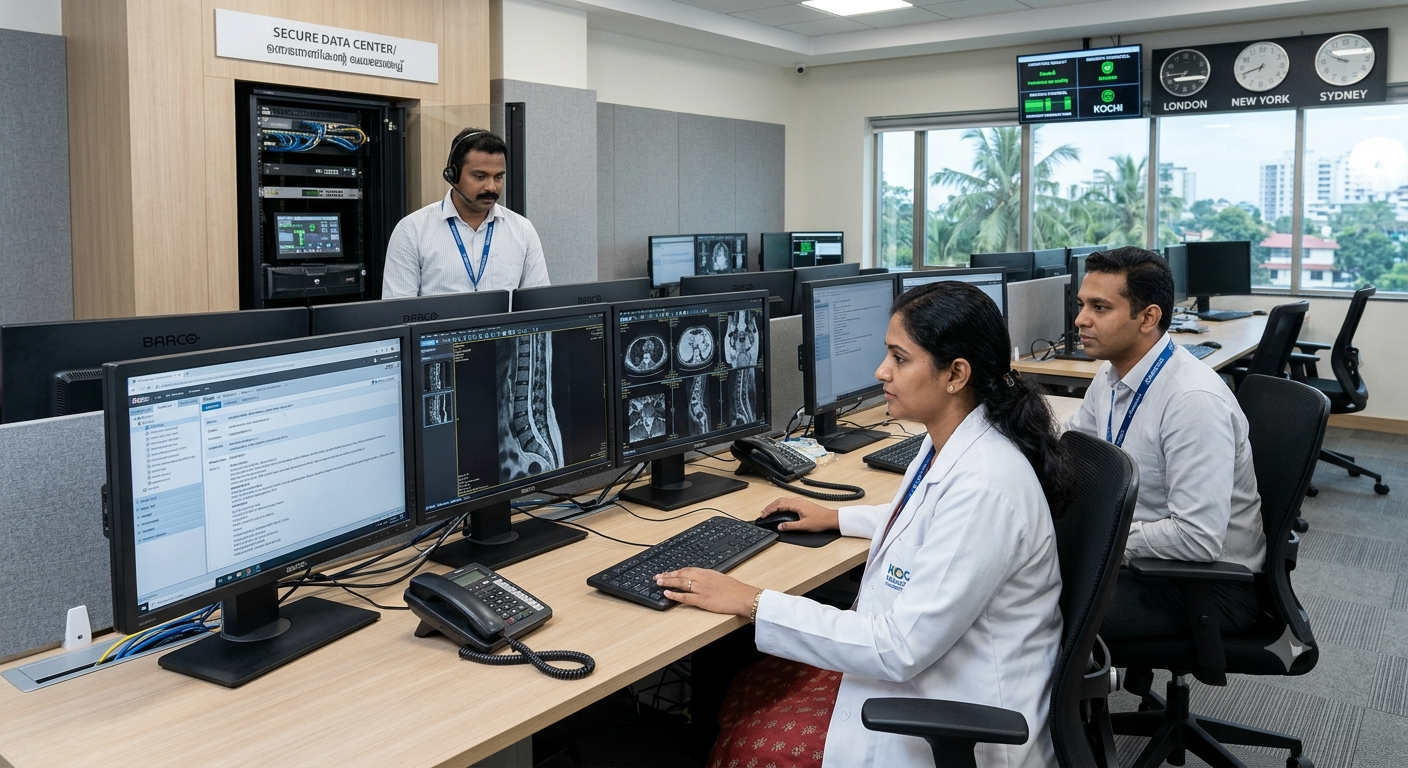
In international teleradiology, coordination will occur among staff who might be located in different time zones and healthcare systems. Effective communication is thus very critical.
The hospitals must offer pertinent clinical history, findings of examination, and previous imaging studies if available. This enables the radiologists to interpret the results appropriately.
An effective communication system must also include provision for how to ask for clarifications, discuss the findings, and receive urgent messages. It is very important to ensure that critical results are effectively communicated to relevant healthcare practitioners.
Quality assurance is as well crucial for successful teleradiology. The audit, peer review, discrepancy management, and feedback from the referring clinicians will be useful for identifying issues that need improvement.
Patient confidentiality is a major consideration when medical information crosses national borders. Hospitals must evaluate the legal and technical requirements that apply to international transfers of health data.
Depending on the jurisdictions involved, requirements may include India’s Digital Personal Data Protection framework, applicable rules in the destination country, contractual safeguards and healthcare-specific obligations.
Healthcare providers should establish clear policies covering data access, retention, storage, security incidents and the responsibilities of each organisation involved.
Encryption, secure authentication, access monitoring and staff training can further strengthen information security. Hospitals should also review their teleradiology partner’s data protection procedures before sharing patient information.
Click one of our contacts below to chat on WhatsApp