
A quality service provided by Assure Health Care Solutions Pvt. Ltd
A quality service provided by Assure Health Care Solutions Pvt. Ltd
+91 98959 90043
+91 87148 42066
info@radproteleradiology.com
hr@radproteleradiology.com
Second Floor, Sree Sree Complex,
Madannada, Kollam -691010
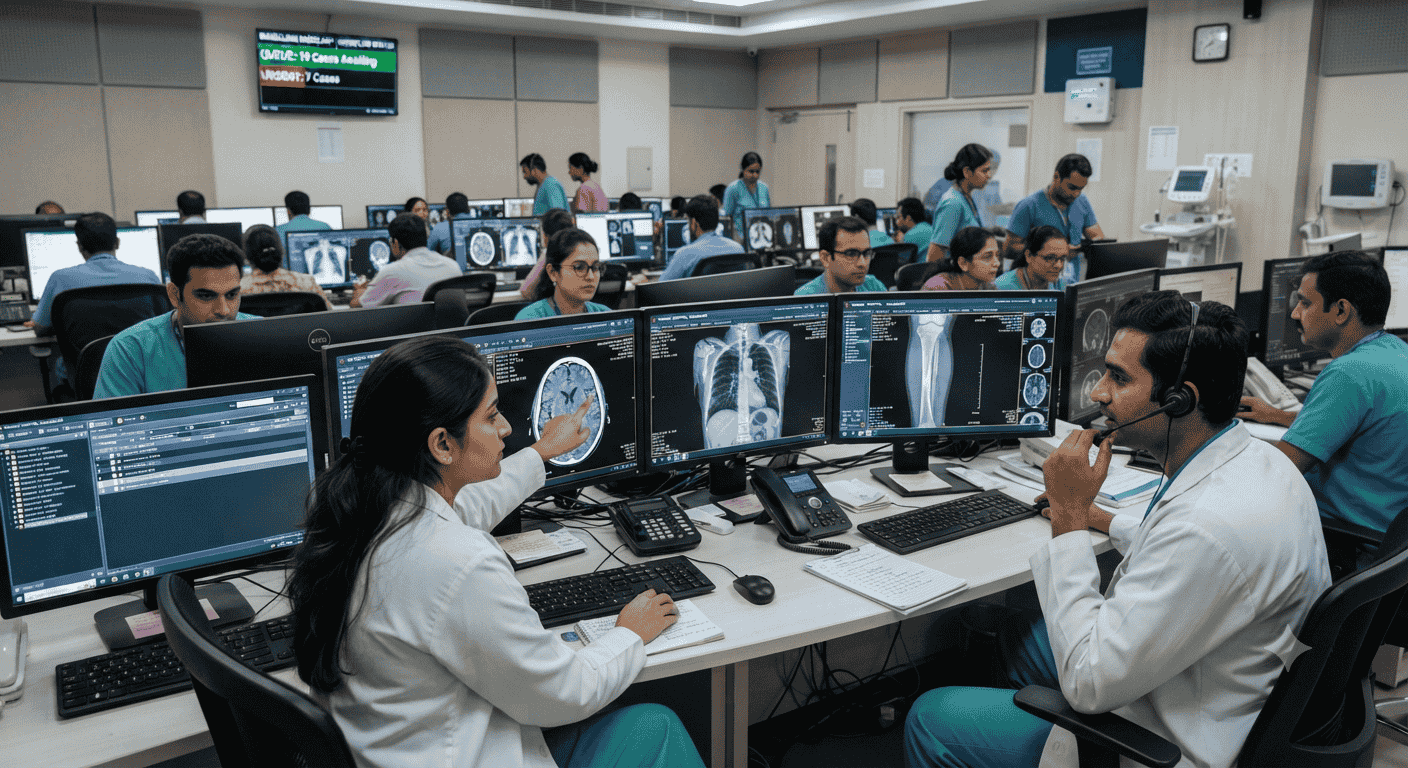
The increasing usage of CT and MRI machines is influencing the way hospitals and diagnostic centers organize their radiology department. In a highly populated city such as Bangalore, there is an increasing trend towards advanced imaging in emergencies, cancer detection, neurological disorders, orthopedic problems, heart examination, and treatments.
Several healthcare centers in Bangalore currently offer continuous CT and MRI scanning services. Some of the examples include KIMS Bengaluru that has reported a considerable volume of CT and MRI scan every month, along with other hospitals that have advanced CT and MRI scanners aided with PACS and RIS technologies.
With the increased usage of scans, there is much more to consider than just the acquisition of images.
CT and MRI have become necessary diagnostic techniques in several areas of medicine. CT is often used for trauma and emergency cases, chest and abdomen investigations, while MRI is used for neurological, musculoskeletal, abdomen and special investigations.
The availability of advanced scanners has also added more types of investigation to this list. Modern departments can deal with cardiology, body, advanced neurology, perfusion and special investigations.
It makes more work for radiologists. A department can have enough scanning capacity but still suffer from reporting delays if the number of investigations grows faster than the number of reporting opportunities.
Higher imaging volumes directly affect the daily workflow of a radiology department.
A typical process involves several stages:
Patient registration → Scan scheduling → Image acquisition → Image transfer → Radiologist review → Report preparation → Quality check → Report delivery
When the number of CT and MRI examinations increases, every stage needs to work efficiently. A delay at one stage can affect the entire process.
For example, if images are acquired quickly but remain in a reporting queue for several hours, faster scanning does not necessarily result in faster diagnosis.
More scans naturally create more cases for radiologists to review. CT and MRI examinations can contain a large number of images, particularly in complex studies.
Radiologists therefore need efficient workstations, appropriate clinical information and organised case prioritisation to manage increasing workloads.
Emergency examinations also need to be identified and moved ahead of routine cases so that urgent findings can reach the treating team quickly.
Not every scan has the same level of urgency.
Trauma, stroke, acute neurological symptoms and other emergency conditions may require faster reporting than routine follow-up examinations.
A well-organised radiology workflow should therefore categorise studies according to clinical priority. Digital RIS and PACS systems can support this process by helping departments manage imaging requests, images and reports electronically.
Higher CT and MRI volumes can place significant pressure on radiologists, especially in departments operating 24/7.
The challenge is not simply reading more cases. Radiologists must maintain attention, accuracy and consistency while handling different examination types and clinical requirements.
This is particularly important for complex imaging where specialist knowledge may be required.
As imaging becomes more specialised, hospitals may require expertise in areas such as neuroradiology, musculoskeletal imaging, abdominal imaging, cardiac imaging and oncology.
A single radiology team may not always have dedicated specialists available for every case and every shift.
This is one area where teleradiology can support hospitals and diagnostic centres by providing access to radiologists with relevant expertise when required.
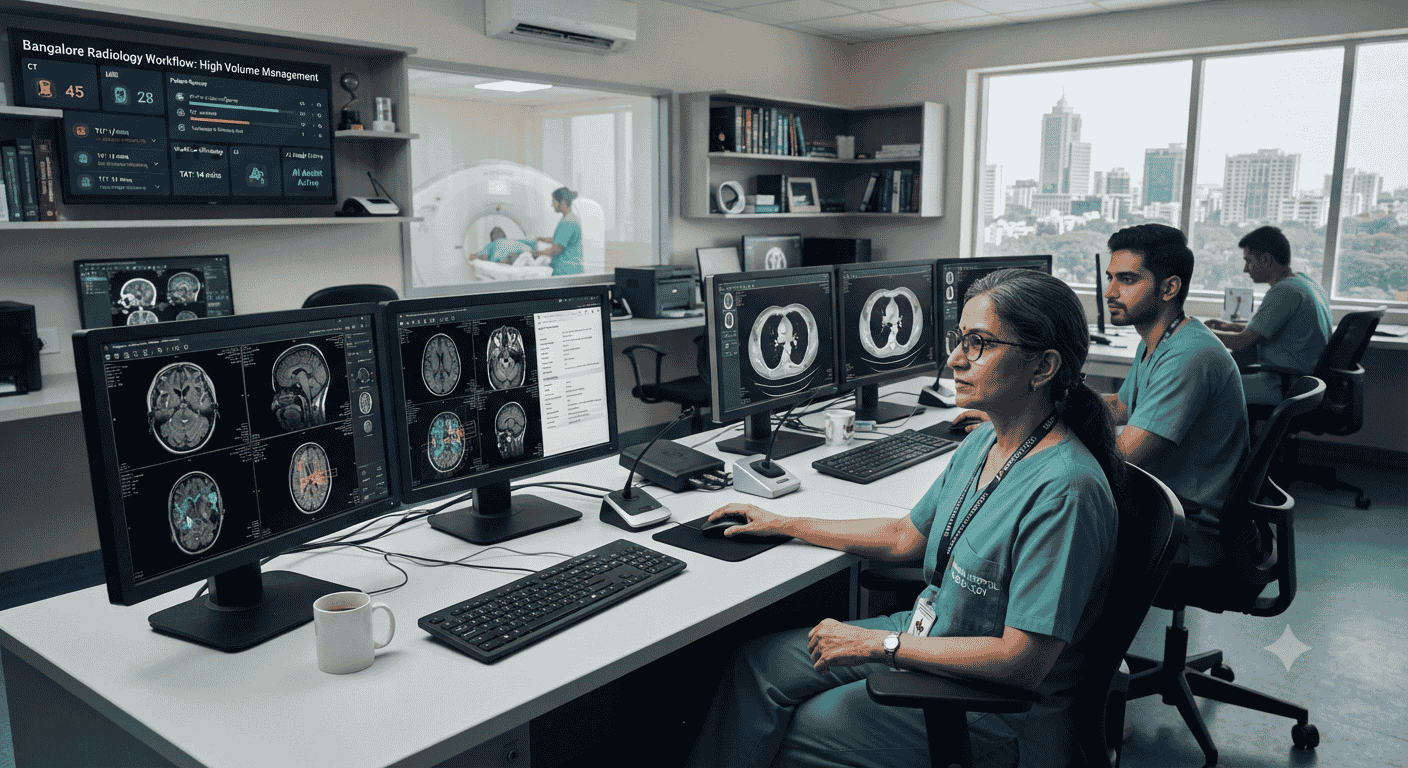
Teleradiology ensures that medical imaging can be transferred in a secure manner from where the image is generated to a radiologist who will interpret it from another place. This will involve the integration of appropriate PACS/RIS technology to allow CT, MRI and other forms of digital imaging to be incorporated in the teleradiology process.
The process can be quite helpful for:
A teleradiology process will enable better case allocation to the available radiologists and turnaround time management.
Increasing CT and MRI volumes should not mean simply asking radiologists to report more cases. The entire workflow needs to be organised around efficiency and quality.
Hospitals can focus on:
These measures can reduce unnecessary delays and help radiology teams handle higher volumes more effectively.
Technology is becoming an important part of managing growing imaging workloads. PACS enables digital storage and access to medical images, while RIS can support scheduling, case management and reporting workflows.
Click one of our contacts below to chat on WhatsApp