
A quality service provided by Assure Health Care Solutions Pvt. Ltd
A quality service provided by Assure Health Care Solutions Pvt. Ltd
+91 98959 90043
+91 87148 42066
info@radproteleradiology.com
hr@radproteleradiology.com
Second Floor, Sree Sree Complex,
Madannada, Kollam -691010
As the need for imaging has grown, Radiologist Workload Management has become a crucial concern for hospitals, diagnostic centers, and teleradiology companies. With an increase in imaging needs, radiologists are expected to produce accurate reports in less time, dealing with complicated patients as well as ensuring quality reporting.
The overworked radiology department may have an impact on productivity, efficient reporting, well-being of staff, and ultimately patient care. There are some techniques that can be applied effectively to deal with an increasing workload of radiologists.
The concept of Radiologist Workload Management consists of arranging imaging procedures, case assignment based on specialization and priority, reporting optimization, and ensuring that radiologists have all the necessary tools for efficient work.
Workload cannot be assessed only based on the quantity of scans performed. One complicated MRI or CT scan can take much more time than a regular X-ray procedure. Thus, the proper workload management should take into account parameters such as the complexity of the procedure, modality, urgency, subspecialties, reporting, and radiologist capacity.
From the perspective of healthcare organizations, the task is to achieve balance in the workflow where urgent procedures are given timely attention and routine procedures are performed efficiently.
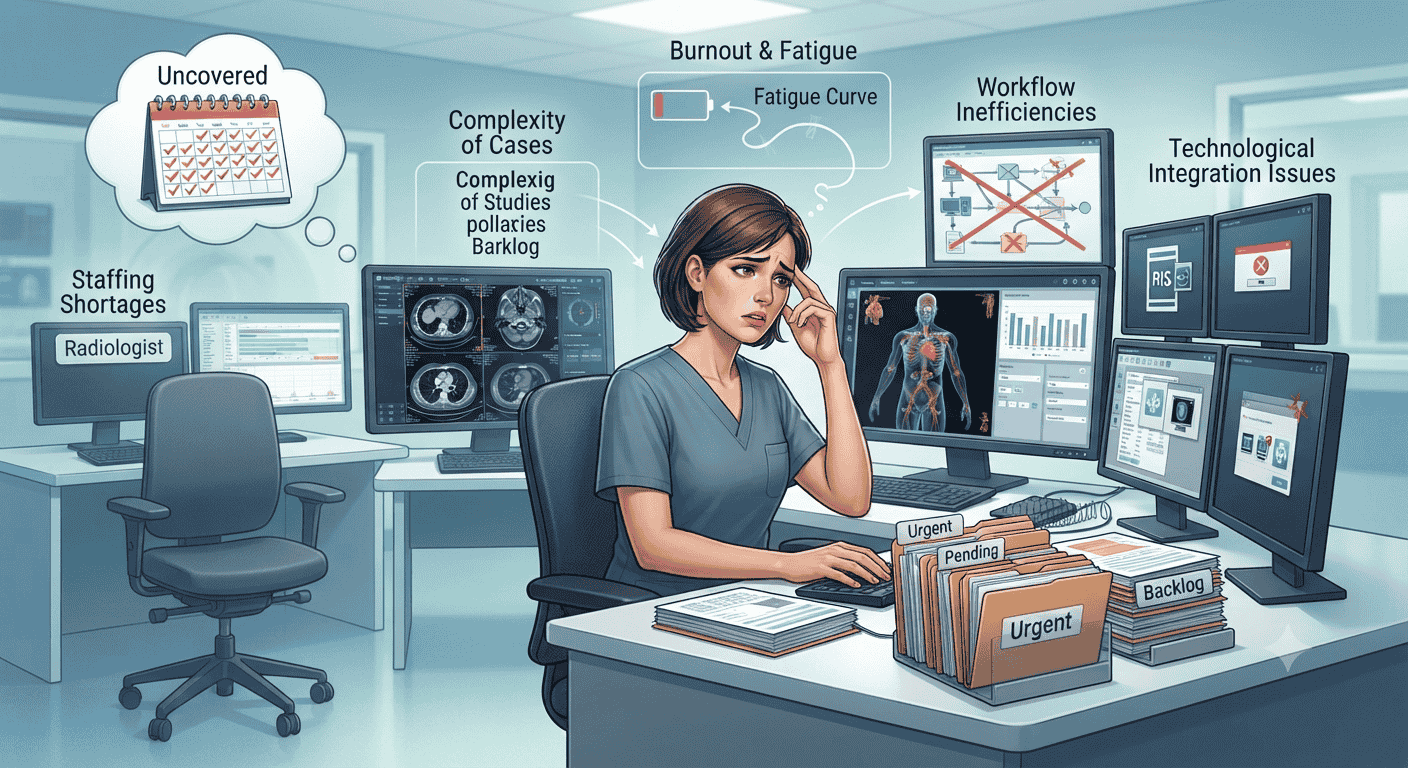
The demand for diagnostic imaging has increased significantly across healthcare settings. CT, MRI, ultrasound, X-ray, and other modalities generate large numbers of studies every day.
When imaging volume grows faster than staffing capacity, radiologists can face reporting backlogs. Persistent backlogs may increase turnaround times and place additional pressure on already busy teams.
Staffing problems are yet another difficulty. It might be that some departments have adequate staffing at all times, but experience difficulties during nights, weekends, holidays, or when there is an increase in patient load.
Another problem could be the uneven distribution of workload among radiologists. One radiologist may have a lot of difficult cases to handle, whereas another radiologist is more available.
Not every examination requires the same level of interpretation. Emergency CT scans, oncology imaging, neurological studies, and complex MRI examinations may require detailed analysis and comparison with previous studies.
A workload management strategy that focuses only on case numbers may therefore provide an inaccurate picture of radiologist capacity.
Hospitals and diagnostic centers increasingly expect rapid reporting, particularly for emergency and inpatient cases. However, speed should never come at the expense of diagnostic quality.
Finding the right balance between turnaround time and accuracy is one of the key challenges in modern radiology workflow management.
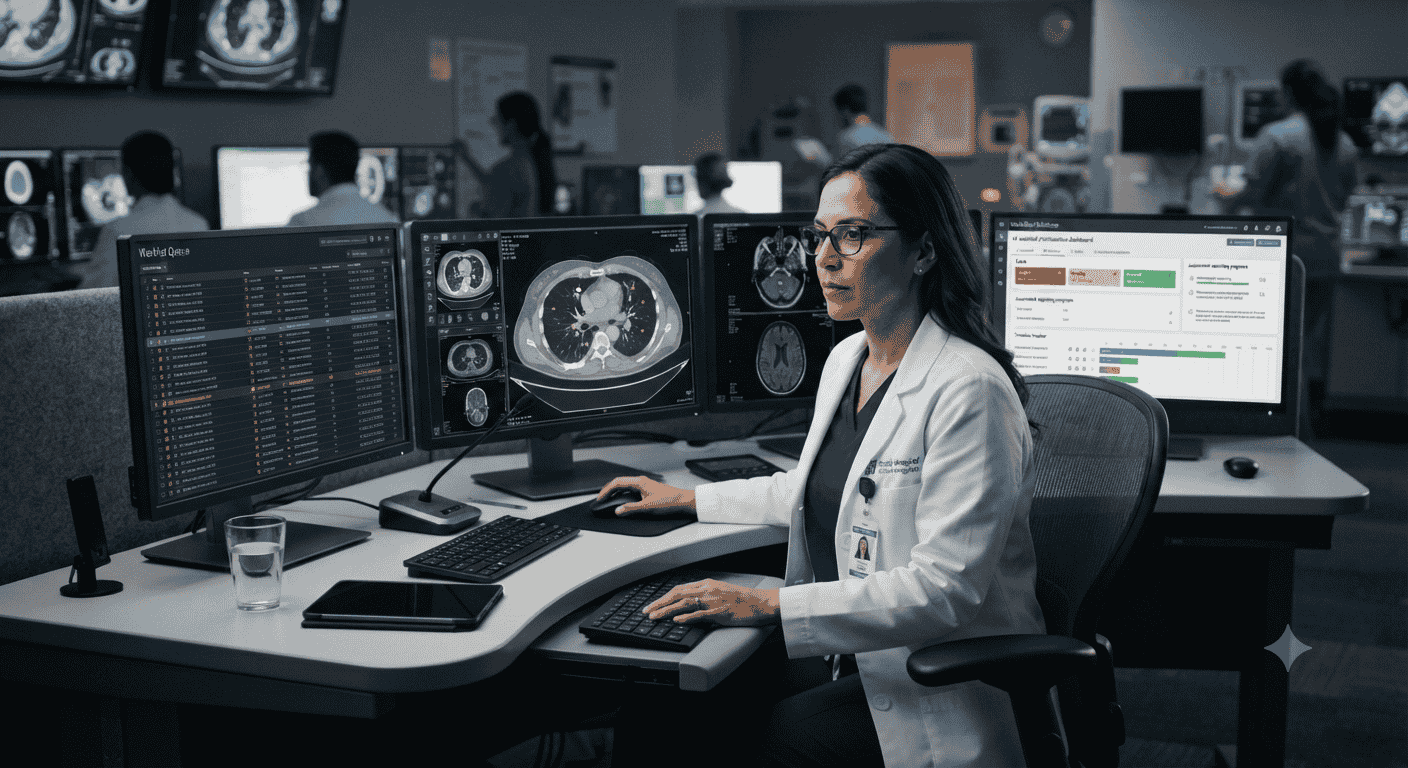
A structured triage system can help radiology departments identify urgent examinations and ensure they reach the appropriate radiologist quickly.
Emergency and time-sensitive studies should be prioritized, while routine examinations can be distributed according to availability and expertise. This approach helps reduce delays without unnecessarily disrupting the entire workflow.
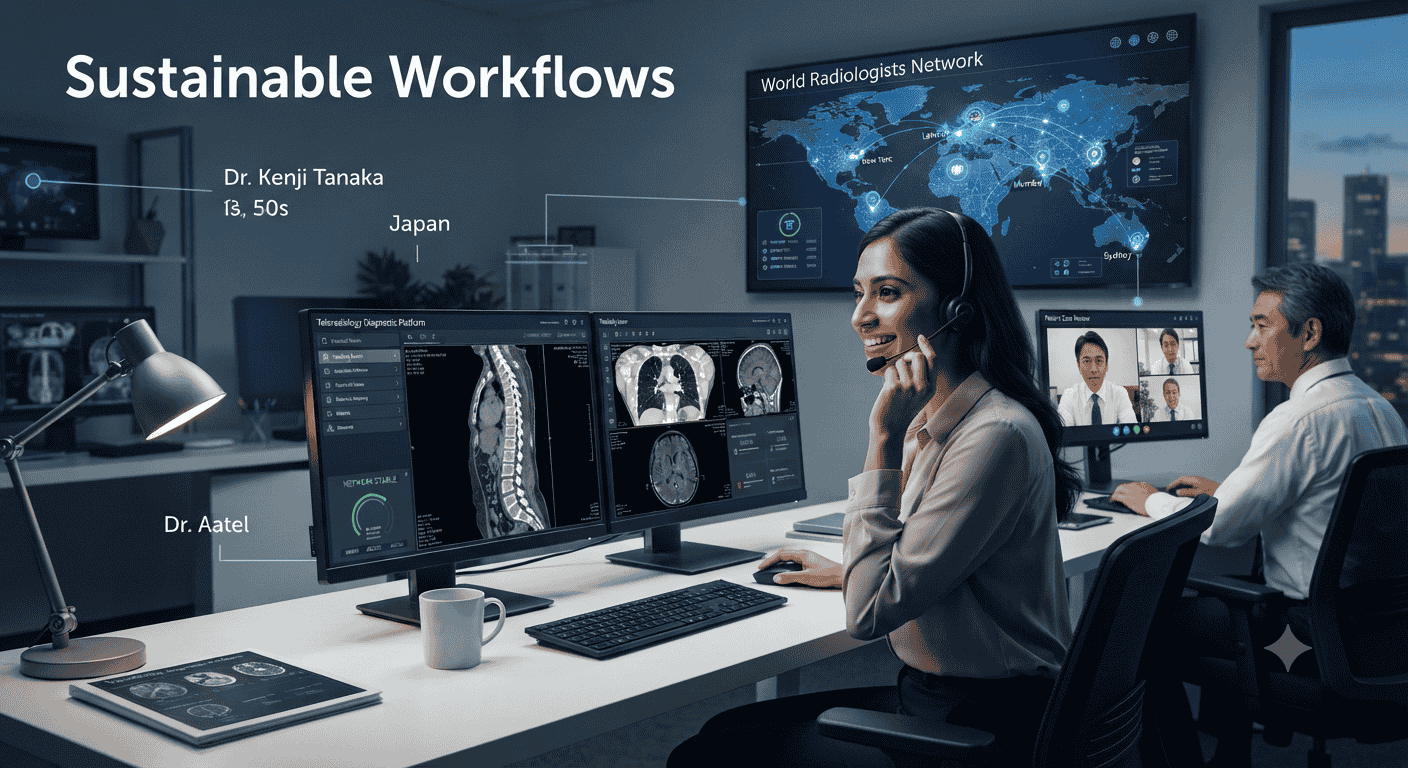
The use of teleradiology will offer the opportunity for the facility to have more reporting capability even when there is not enough internal capacity. Rather than depending solely on the in-house radiologists, there will be the ability for the facility to work with remote radiologists who can perform interpretations based on availability and subspecialties.
When there is a difficulty in covering the night shift, reporting backlog or a surge in imaging workload, one can partner with a teleradiology firm such as Radpro Teleradiology.
The use of technology can eliminate tedious administrative procedures and improve case distribution. Worklist automation, intelligent case distribution, voice recognition, PACS integration, and report templates can assist radiologists to spend more time on interpretation than on procedural activities.
AI may be used to aid certain steps in the workflow process, for example, to prioritize critical images or perform image analysis. Nevertheless, AI is supposed to supplement, not replace, the knowledge and skills of qualified radiologists.
Radiology departments should monitor more than the number of studies reported. Useful performance indicators may include:
These measurements can help managers identify bottlenecks and make better staffing and workflow decisions.
With a good teleradiology system in place, one can consider this as an extension of the radiology department of the healthcare organization. In this case, it can provide the needed backup during off hours and help in meeting the increased load on their radiology services and access radiologists with specific skills.
For healthcare organizations, it can make their delivery of radiology services more scalable. Rather than expanding their full-time staff for all variations in their workloads, they can leverage external reporting support where necessary.
Proper communication, technology, quality assurance, and time management can ensure that teleradiology plays a key role in Radiologist Workload Management.
Click one of our contacts below to chat on WhatsApp