
A quality service provided by Assure Health Care Solutions Pvt. Ltd
A quality service provided by Assure Health Care Solutions Pvt. Ltd
+91 98959 90043
+91 87148 42066
info@radproteleradiology.com
hr@radproteleradiology.com
Second Floor, Sree Sree Complex,
Madannada, Kollam -691010

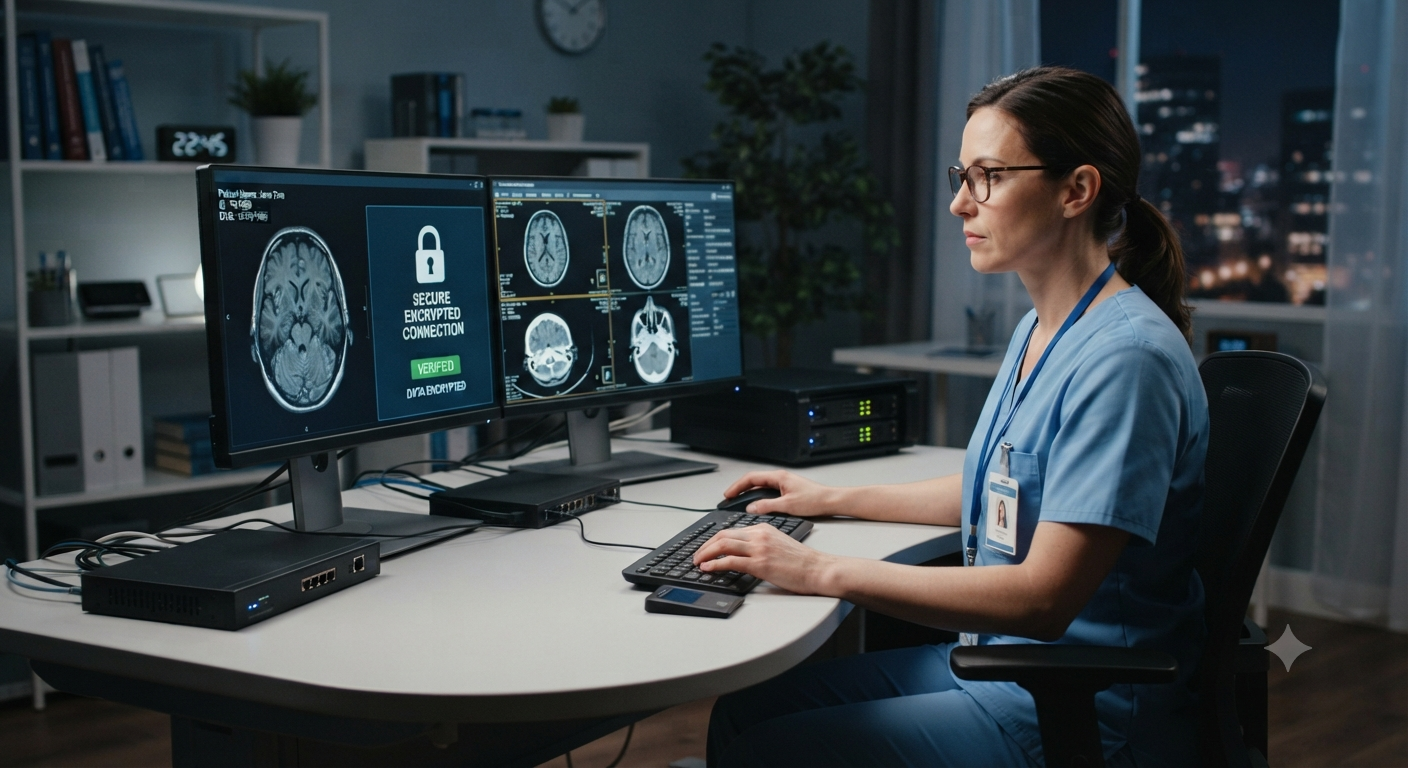
The quick embracement of the digital healthcare era has revolutionized the delivery of medical imaging services. Amongst other innovations, teleradiology has proven to be a key component which allows for interpretation of diagnostic images and timely reporting despite the geographical location. However, although teleradiology has revolutionized healthcare, it has created many privacy and cybersecurity risks in relation to patient data.
Security of Data in Teleradiology has become one of the biggest concerns of the healthcare sector in today’s world. Medical images, patient history, and diagnostic reports include private information that should be secured against cyber threats and data breaches.
Patient confidentiality is of utmost importance in Radpro Teleradiology services. Through implementation of various security practices and measures, healthcare facilities will be able to transmit medical images securely.
All digital images that pass through the teleradiology system such as X-rays, CT scans, MRIs, or ultrasounds contain sensitive patient data. Breach of any kind can result in identity theft, financial fraud, legal action, and loss of trust.
Security measures in healthcare will ensure that:
In the digital age of healthcare, cybersecurity has become an absolute necessity.
Healthcare organizations face numerous digital threats that specifically target medical data.
Hackers often target healthcare databases because patient records contain valuable personal information. Unauthorized access can expose confidential medical histories, imaging reports, and personal details.
Ransomware encrypts hospital systems and demands payment to restore access. Such attacks can delay diagnoses, interrupt emergency care, and affect patient outcomes.
Cybercriminals frequently use fake emails to trick healthcare professionals into revealing login credentials or downloading malicious software.
Not all security risks come from outside. Employees with excessive access privileges or poor cybersecurity awareness may unintentionally expose sensitive information.
Remote reporting requires secure internet connections. Public Wi-Fi or poorly protected networks increase the risk of data interception.
Healthcare organizations can significantly reduce risks by implementing a comprehensive cybersecurity strategy.
Encryption ensures that medical images and reports remain unreadable during transmission. Even if hackers intercept the data, they cannot access its contents without the proper encryption keys.
Secure encryption should protect:
Passwords alone are no longer sufficient.
Multi-factor authentication requires users to verify their identity using additional methods such as:
This significantly reduces unauthorized access.
Not every employee requires access to all patient records.
Role-based permissions ensure that:
This minimizes internal security risks.
Modern teleradiology platforms often rely on cloud technology.
Choosing secure cloud environments provides:
Healthcare organizations should select providers that prioritize healthcare-grade security standards.
Routine security assessments help identify vulnerabilities before cybercriminals exploit them.
Effective audits include:
Proactive monitoring strengthens overall system security.
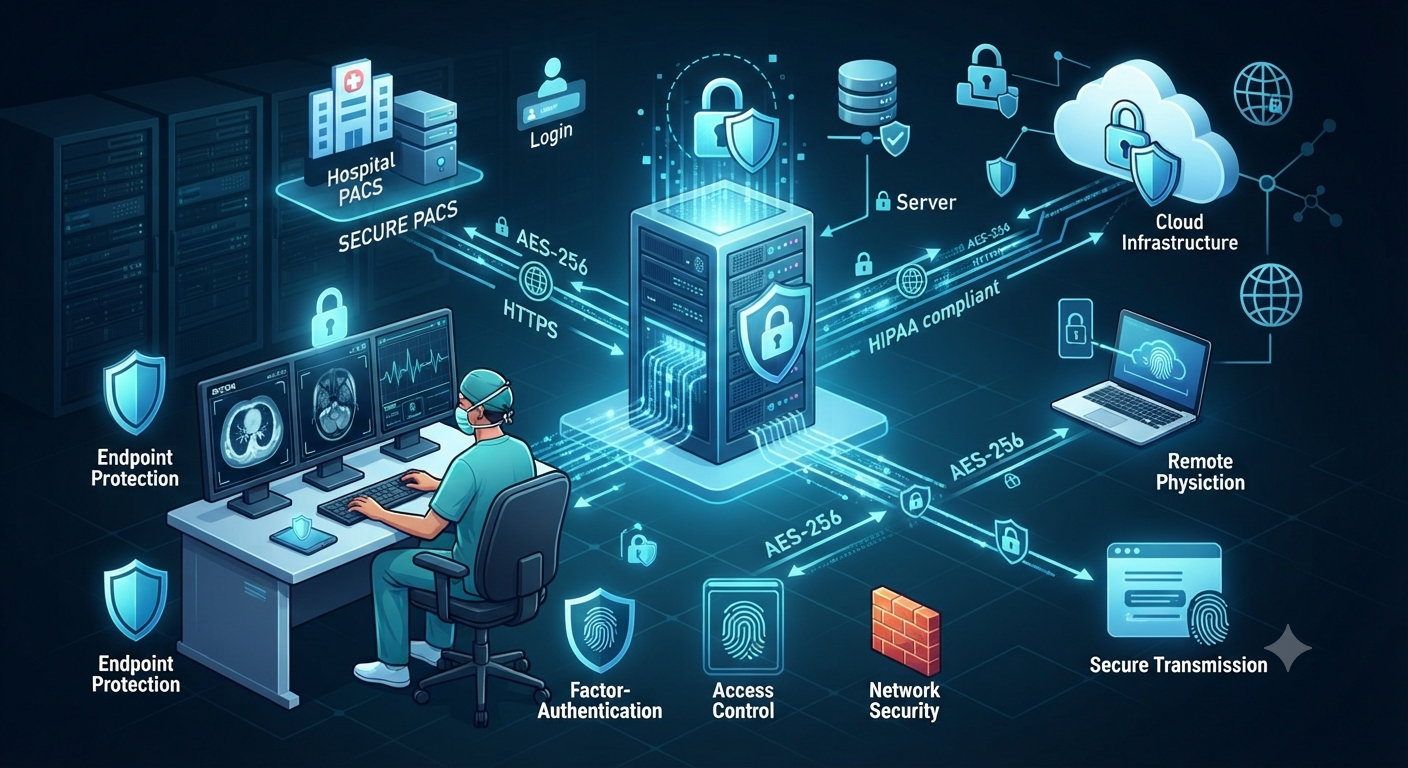
Healthcare organizations are required to adhere to certain international and regional regulations meant for the protection of patient information.
These include the following:
Click one of our contacts below to chat on WhatsApp