
A quality service provided by Assure Health Care Solutions Pvt. Ltd
A quality service provided by Assure Health Care Solutions Pvt. Ltd
+91 98959 90043
+91 87148 42066
info@radproteleradiology.com
hr@radproteleradiology.com
Second Floor, Sree Sree Complex,
Madannada, Kollam -691010
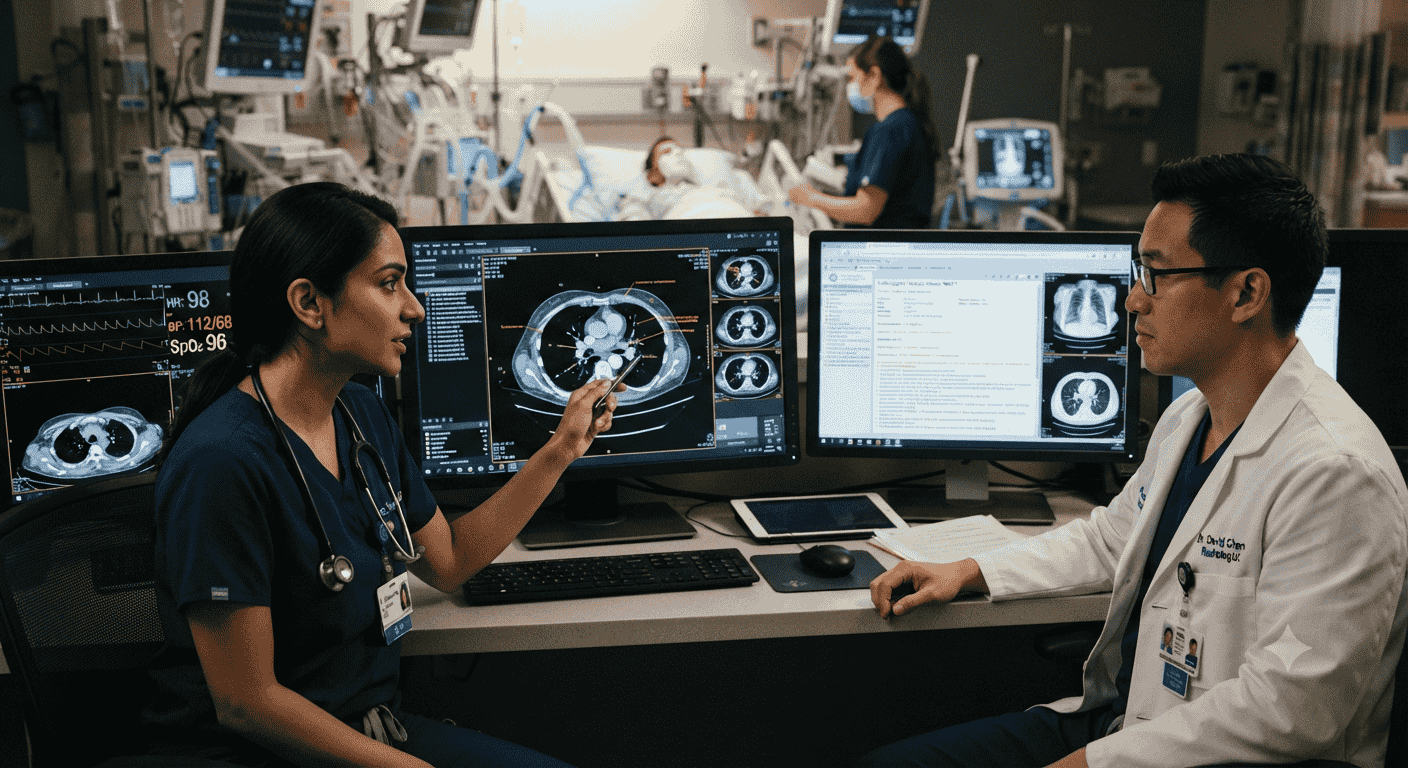
In critical care, timing is essential. The patients admitted into intensive care units often encounter rapidly developing dangerous changes that have to be diagnosed and treated in a timely manner. In such a way, radiological imaging techniques including X-ray, CT, MRI, and ultrasound serve as a key factor. Nonetheless, imaging alone is not sufficient. Clinical decision-making depends on the timeliness and quality of the radiology report. That is why Radiology Reporting in Critical Care is a crucial element of modern healthcare.
If a doctor has to wait for the results of the imaging, the delayed reporting can prevent the timely intervention. A prompt and clinically useful radiology report will help a doctor to understand the situation and provide the right treatment. Thanks to professional teleradiology services such as Radpro Teleradiology, any hospital can get assistance from an experienced radiologist and receive the radiology report regardless of the availability of an in-house specialist.
Such critical care patients can have diseases like stroke, pulmonary embolism, bleeding inside the body, injuries, pneumothorax, serious infections, or other urgent problems in the abdomen. Such diseases can progress very quickly, thus making prompt diagnosis necessary.
A prompt radiology report is helpful to the treating doctors because it will allow them to:
In an ICU setting, even the delay of several hours could influence the decision-making process. Hence, prompt reporting must be regarded as an essential component of critical care.
In cases of emergency or intensive care units, radiologists should pay attention to those things that will have an immediate impact on patient management. For instance, a CT scan may show an intracranial hemorrhage for a patient who is experiencing neurological symptoms. Likewise, a chest X-ray may show a tension pneumothorax, a mislocated medical device, or any other serious pulmonary abnormality.
The radiologist’s skills of recognizing critical findings and communicating them effectively are vital. The report should be clear and clinically important, while critical findings should be communicated using the right protocols.
Sometimes, hospitals lack specialist radiologists who would be on duty 24 hours a day. It can especially apply to smaller hospitals and emergency rooms, as well as health care institutions that operate nights, weekends, and holidays.
The role of teleradiology consists in ensuring secure delivery of medical images to the qualified radiologist for analysis at the remote location. This approach enables continuous coverage without having a radiologist at the hospital.
Radpro Teleradiology can be helpful for healthcare providers in finding appropriate reporting services for radiology professionals. The service will assist hospitals in obtaining qualified radiological analysis of images in case of lack of resources.
In cases when fast reporting is crucial, it can help to avoid wasting time and provide efficient communication of radiologists and clinicians.
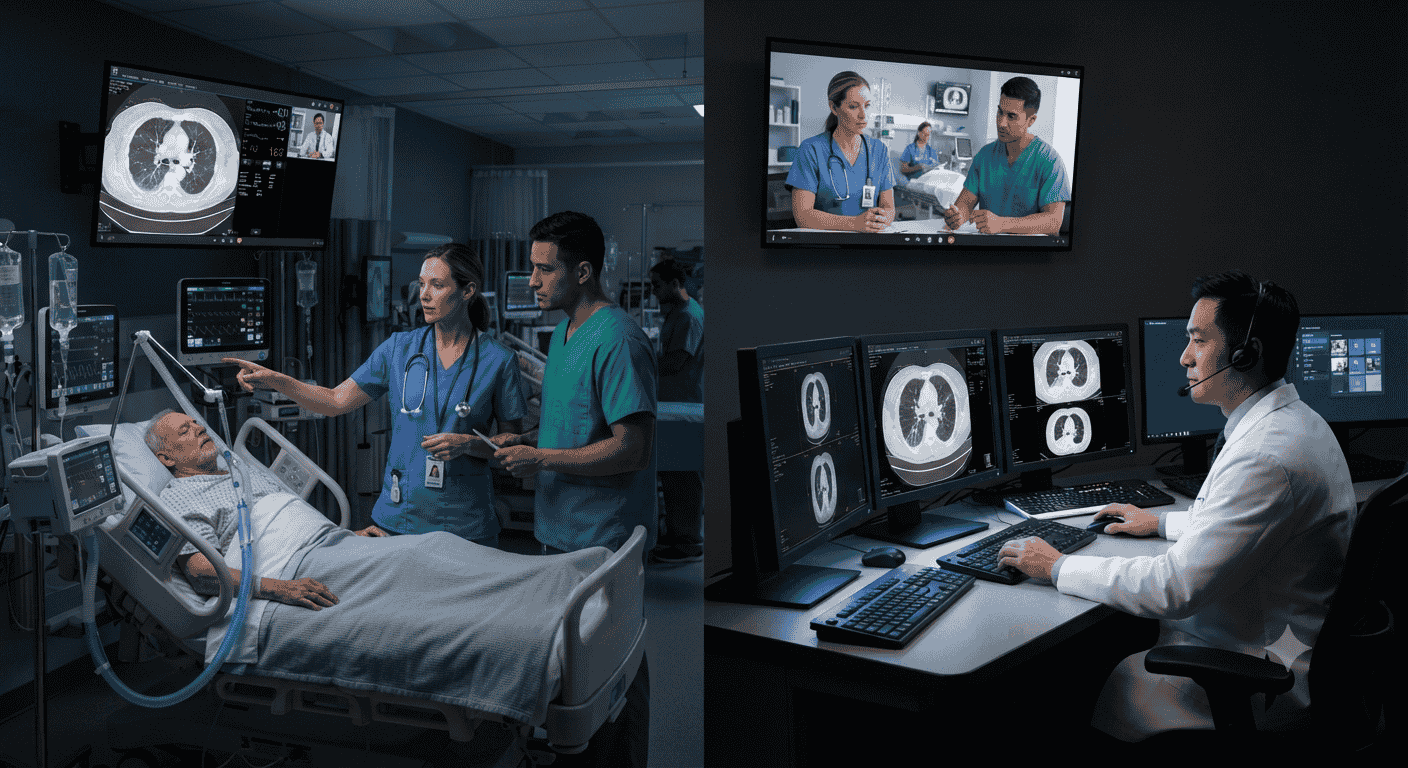
Radiology reporting in critical care requires more than simply identifying abnormalities. The report should provide information that is useful for immediate clinical decision-making.
An effective critical care report should be:
This combination of accuracy, speed, and communication makes radiology reporting particularly valuable in critical care environments.
A strong reporting workflow can help reduce bottlenecks between imaging acquisition and clinical action. Digital imaging systems, secure communication platforms, structured reporting, and teleradiology networks can work together to improve efficiency.
Hospitals can prioritize urgent examinations and ensure that critical findings receive appropriate attention. At the same time, clinicians can receive reports electronically, helping them access imaging interpretations without waiting for physical documentation.
For healthcare organizations, this can also provide greater flexibility in managing reporting volumes. During periods of high patient demand, remote radiology support can help distribute workloads and maintain reporting continuity.
Patient safety is one of the most important reasons for prioritizing timely radiology reporting. A radiological finding may change the course of treatment within minutes or hours.
For instance, identifying intracranial bleeding, acute vascular occlusion, pulmonary embolism, or internal trauma promptly can help clinicians initiate appropriate treatment sooner. Similarly, recognizing complications related to lines, tubes, drains, or ventilation equipment can be important for critically ill patients.
Timely reporting does not replace clinical judgment, but it provides clinicians with essential diagnostic information when they need it most.
Healthcare facilities looking to strengthen their critical care imaging services should consider factors such as reporting turnaround times, radiologist expertise, communication procedures, technology infrastructure, data security, and scalability.
A reliable teleradiology provider should have workflows designed around clinical priorities rather than simply processing images. Consistent quality and dependable communication are particularly important when dealing with emergency and ICU cases.
Radpro Teleradiology aims to support healthcare organizations with professional remote radiology reporting, helping bridge the gap between imaging and timely clinical
Click one of our contacts below to chat on WhatsApp