
A quality service provided by Assure Health Care Solutions Pvt. Ltd
A quality service provided by Assure Health Care Solutions Pvt. Ltd
+91 98959 90043
+91 87148 42066
info@radproteleradiology.com
hr@radproteleradiology.com
Second Floor, Sree Sree Complex,
Madannada, Kollam -691010
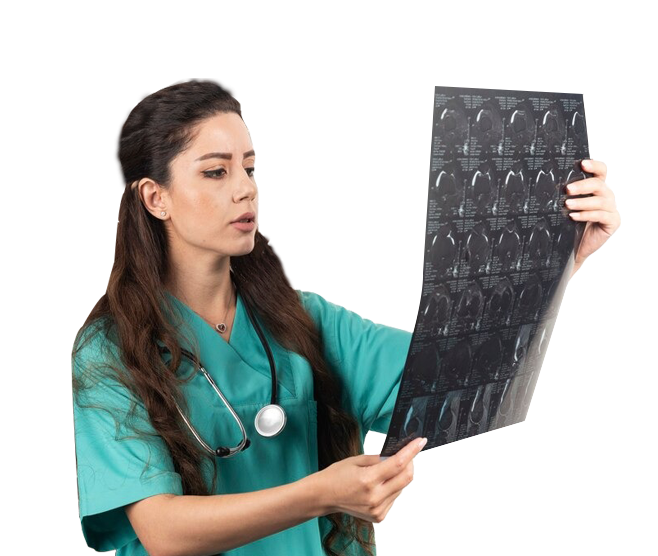
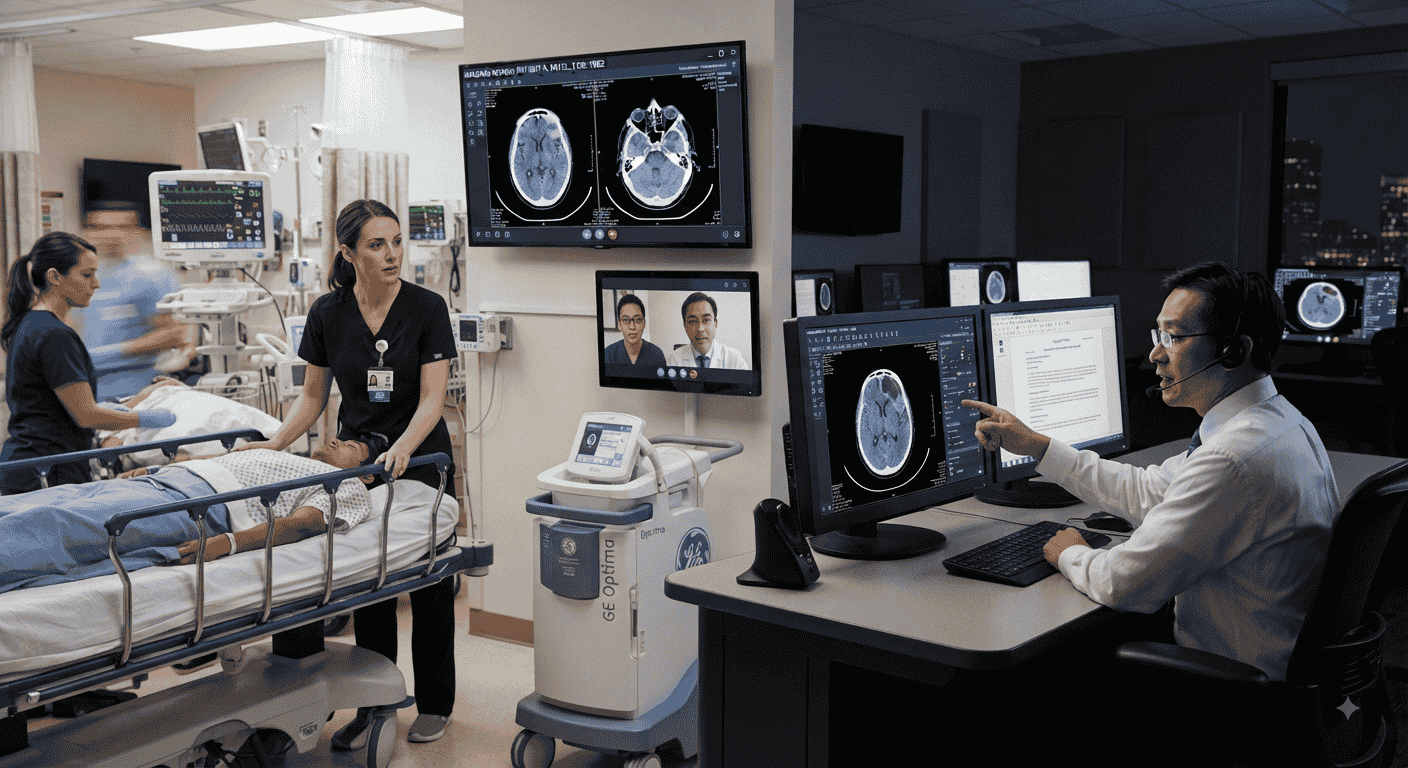
In emergency medicine, speed, precision, and quick clinical decisions are essential elements. Whenever a patient enters the hospital with stroke symptoms, traumatic injuries, internal bleeding, or any other serious medical problem, every second counts. Medical imaging has an important role in the diagnosis of such problems, but sometimes the availability of skilled radiologists might be an issue around the clock. It is in such cases that the Role of Teleradiology in Emergency Medicine becomes crucial.
Teleradiology allows transferring medical images such as CT scans, MRI scans, X-rays, and ultrasounds to be transmitted securely to radiologists in distant locations for their analysis.
An emergency department functions all throughout the day and night to cater to patients that have diverse medical emergencies. Nevertheless, not all hospitals have a resident radiologist available 24 hours a day especially during nighttime, weekends, and holidays.
Delays in analyzing diagnostic images might hinder critical decision-making. Patients suffering from strokes, for instance, need rapid analysis of diagnostic images to find out if they qualify for certain emergency procedures. Trauma patients would also benefit from timely diagnosis through images in order to find out about any fractures, organ damage, or internal bleeding.
Teleradiology is a useful method as medical images can be accessed from afar by the radiologist, which will help with receiving the necessary diagnosis on time.
The greatest benefit of teleradiology in emergency situations is the possibility of accessing radiological knowledge outside the conventional working hours of the hospital.
Through teleradiology, emergency imaging studies can be sent to a radiologist who will then analyze the images and issue his/her report from a remote location. This comes in handy especially for hospitals whose staff are not sufficient enough or need specialized help for difficult cases.
Speed is one of the most important factors in emergency medicine. Teleradiology can help reduce the waiting time between image acquisition and radiologist interpretation.
For conditions such as suspected stroke, head trauma, pulmonary embolism, or acute abdominal emergencies, rapid access to imaging expertise can support clinicians in making informed decisions sooner.
Emergencies do not follow a fixed schedule. A patient may require urgent imaging at midnight or during a public holiday when an on-site radiologist may not be available.
Remote radiology services can provide access to qualified radiologists around the clock. This continuous availability can help hospitals maintain diagnostic support outside normal working hours.
Neurological emergencies and major trauma are among the situations where rapid imaging interpretation is particularly important.
In suspected stroke cases, brain imaging can help clinicians identify conditions such as intracranial bleeding or other abnormalities. In trauma cases, CT and X-ray examinations can help identify fractures, internal injuries, and other potentially life-threatening conditions.
By connecting emergency departments with remote radiologists, teleradiology can contribute to a more efficient diagnostic workflow.
Teleradiology is not only about tele-reporting. There is also a possibility that teleradiology can enhance collaboration between radiology and emergency departments.
As the imaging studies are automatically transferred via a secure network, radiologists can view them remotely without having to visit the hospital. The reports can be electronically sent to the right clinical department.
This process may contribute to eliminating unnecessary delays and enhancing collaboration between specialists, as the emergency physicians can devote more time to managing patients, whereas radiologists can interpret images.
More than faster reporting, the Use of Teleradiology in Emergency Medicine could help healthcare institutions enhance their access to more expert diagnosis. The lack of experienced radiologists in certain facilities could be addressed through the use of teleradiology services.
Smaller healthcare institutions could benefit from teleradiology through gaining access to expert specialists who cannot otherwise be accessed within the local area. Such is especially helpful when emergencies call for the expertise of radiologists who specialize in fields like neuroradiology, musculoskeletal imaging, or body imaging.
Access to faster diagnostic data could assist doctors in determining the need for immediate action, referrals, admissions, or even further testing of the patient.
How could healthcare facilities be benefited from teleradiology?
Thus, teleradiology is becoming an essential part of contemporary emergency healthcare services.
Despite the benefits of teleradiology, healthcare professionals have to take into account various considerations prior to establishing the practice. Good internet connection, secure images transfer, proper data security policies, compatible imaging equipment, and qualified radiologists are some of the key considerations.
Hospitals need to ensure effective communication about important results. In case of emergencies, it might be necessary to contact the radiologist and the physician immediately instead of waiting for a written report.
The effectiveness of the teleradiology process depends on technology, workflow, reporting skills, and effective communication.
With the development of technology in the healthcare field, there is an expectation that teleradiology will become even more associated with emergency medicine. Through cloud-based imaging solutions, use of artificial intelligence in the process of workflow, and other advanced technologies, efficiency in radiology services will be improved.
Radiologists can u
Click one of our contacts below to chat on WhatsApp